How to be a guest at a Moroccan table.
Shoes at the door, bread before anything, the right hand, tea poured from a height. What happens at a family's table, in the order it happens, and what is asked of you: less than you fear.
A Homnna guide. Every home has its own customs: follow hers first.

Bread first, always
The meal, in the order it happens
At the door
Say salam alaykum. Shoes come off before the carpets of the salon: look at the pair by the door, and follow it. Not everybody shakes hands; a hand laid on your heart is a greeting too, and you can wait to be offered one.
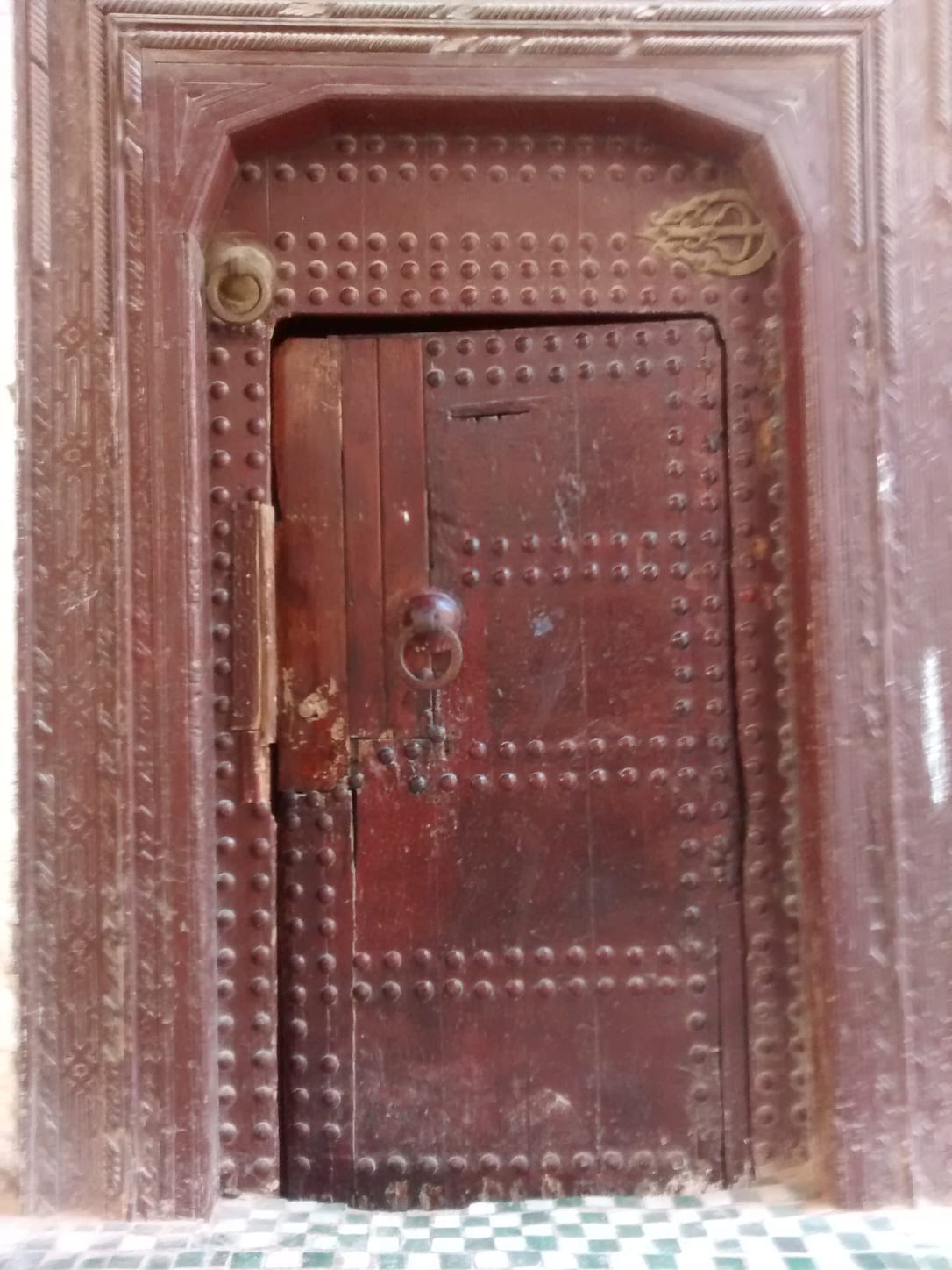
Old doors in Fès have two knockers with two sounds. Traditionally one was for men and the other for women, so the house knew who should go and open. Washing your hands
In many homes a jug and a basin come round before the meal, and water is poured over your hands; elsewhere you are shown where to wash. Either way, the meal waits for it.
Bismillah, and the bread
The meal starts with bismillah, in the name of God: say it, or simply wait for it. Bread is the cutlery. Tear a piece, and take food from the dish with it. Bread is respected: a piece that falls is picked up, and none is thrown away.
One dish, and your side of it
The tagine sits in the middle and everybody eats from the part in front of them. Eat with your right hand. The best pieces are often pushed towards the guest: take them, it is meant. A couscous is rolled into a ball in the palm by those who know how; a guest is usually handed a spoon, and nobody minds.
Kul! Kul!
Eat, eat: you will hear it all meal, and more will be put in front of you. It is the welcome, not a test. When you have had enough, say so with a hand on your heart: shbe3t, alhamdulillah. Eating well is the compliment.
The tea
Mint tea is poured from a height, for the foam: foam means it is well made. The glass is small and hot; hold it by the rim. The host pours, never the guest, and taking at least one glass is the polite thing.
Leaving
Thank the cook: lah ykhlef. You will be told to come back, and it is meant too. Hand her the total you agreed, in cash; nobody expects a tip.

Six words of Darija
Morocco's own Arabic, as people say it at the table. A try is welcomed, and laughed with.
- Salam alaykumHello, at the door. The answer is wa alaykum salam.
- BismillahIn the name of God: before the first bite.
- BssahaEnjoy it: said to somebody eating, and to you.
- TbarkallahWonderful: for the dish, for the home.
- Shbe3tI am full. Add alhamdulillah, a hand on your heart.
- Lah ykhlefThank you for the meal, to the cook, when you leave.
Good to know
- Dress as you would to visit a family: shoulders and knees covered is the respectful default.
- No alcohol at the table, and none as a gift. Nobody smokes in the room during the meal.
- Nothing is expected as a gift. Pastries from a pâtisserie, fruit, or a cone of sugar, the traditional present, are always welcome.
- Ask before taking a photo of anybody. Of the dishes, ask too: it is her table.
- In Ramadan the family breaks the fast at sunset with dates and harira. You are not expected to fast; you are expected not to eat in front of those who do, outside the meal.
Your place at the table is one question away.
Photographs: Wikimedia Commons (2)
- Tea poured over a tray of glasses, beside a plate of harchaby Khammal92,CC BY-SA 4.0, cropped and resized
- A door in Fès, with its two knockersby Mx. Granger,CC0, resized