A Moroccan day, meal by meal.
Four meals, on a clock that may not be yours: lunch is the big one, the afternoon has a meal of its own, and dinner comes late. What a home puts on the table at each, and when.
A Homnna guide. The usual prices are the ones the app starts from, a person; yours to change.

Breakfast · asked from 06:00
The morning: bread, oil, honey, and tea
A Moroccan breakfast is a table of small things to tear and dip. Msemen, the square flatbread folded in layers, warm from the pan. Baghrir, the semolina pancake with a thousand holes that drinks melted butter and honey. Harcha, a semolina griddle bread. Bread with olive oil, olives, fresh cheese, eggs.
In the south round Agadir there is amlou: almonds, argan oil and honey, ground into a paste. To drink, mint tea, or coffee with milk, half and half.
Usually 70 MAD a person at a Homnna family's table.

Lunch · asked from 10:00
Midday: the meal of the day
Lunch is the big meal, eaten around one or two o'clock, when the family is home. Cooked salads come first, zaalouk of aubergine and taktouka of peppers, with bread. Then the tagine in the middle: chicken with preserved lemon and olives, beef with prunes, or vegetables slow-cooked under the cone. Fruit to finish.
On Fridays, lunch is couscous.
Usually 120 MAD a person at a Homnna family's table.

Afternoon tea · asked from 15:00
The afternoon: mint tea and something sweet
Between five and six, the kettle again. Mint tea poured from a height, and on the tray what the house has baked: ghriba biscuits, a sponge cake, msemen with honey, almond pastries. It is the meal neighbours drop in for.
In Ramadan it gives way to the evening: chebakia, the honeyed flower biscuits, and sellou wait for the end of the fast.
Usually 60 MAD a person at a Homnna family's table.

Dinner · asked from 18:00
The night: late, and lighter
Dinner comes later than in Europe, often after eight or nine. It is lighter than lunch: harira, the tomato, lentil and chickpea soup, a tagine kept from midday, eggs and bread, or a dish of the day.
In Ramadan the fast breaks at sunset with dates, milk and harira, and dinner follows later still.
Usually 120 MAD a person at a Homnna family's table.
Every city has its dish
- In Marrakech, tanjia: beef or lamb with preserved lemon and spices, sealed in a clay jar and left in the embers of the hammam's fire for hours.
- In Fès, pastilla: thin pastry around pigeon or chicken, almonds and egg, dusted with sugar and cinnamon, sweet and savoury at once.
- Round Agadir and in the Souss: amlou, argan oil, the bread called tafarnout, and fish from the coast.
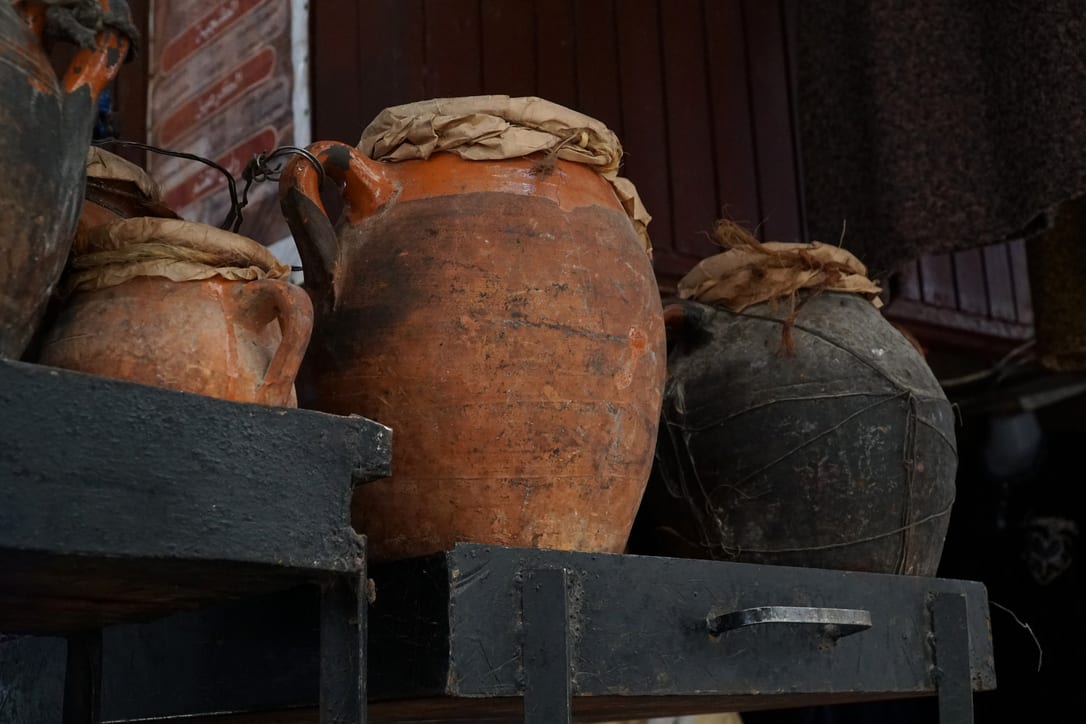
Tanjia, Marrakech 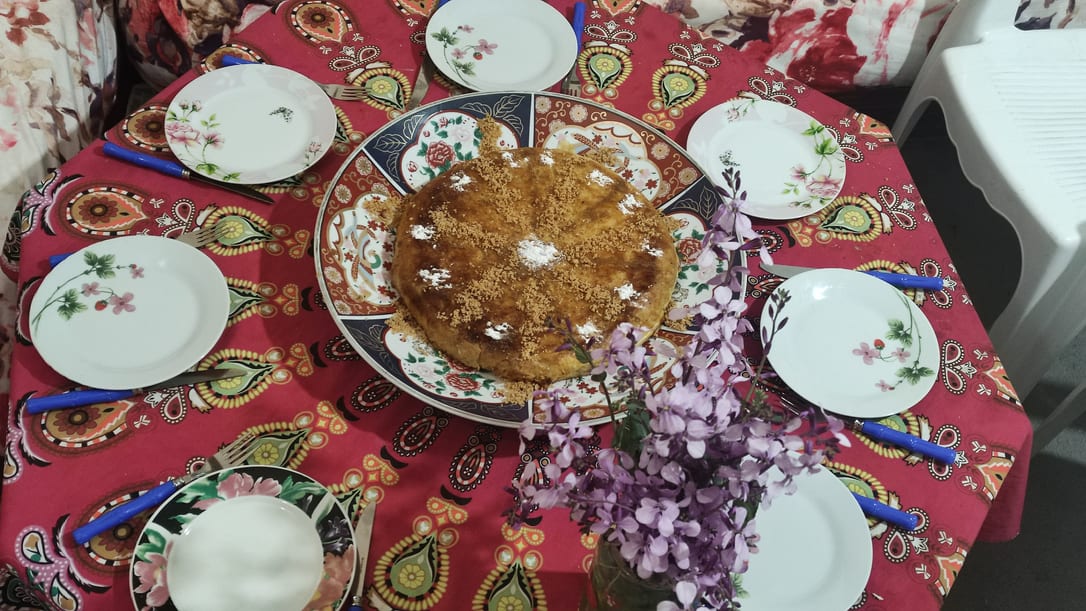
Pastilla, Fès 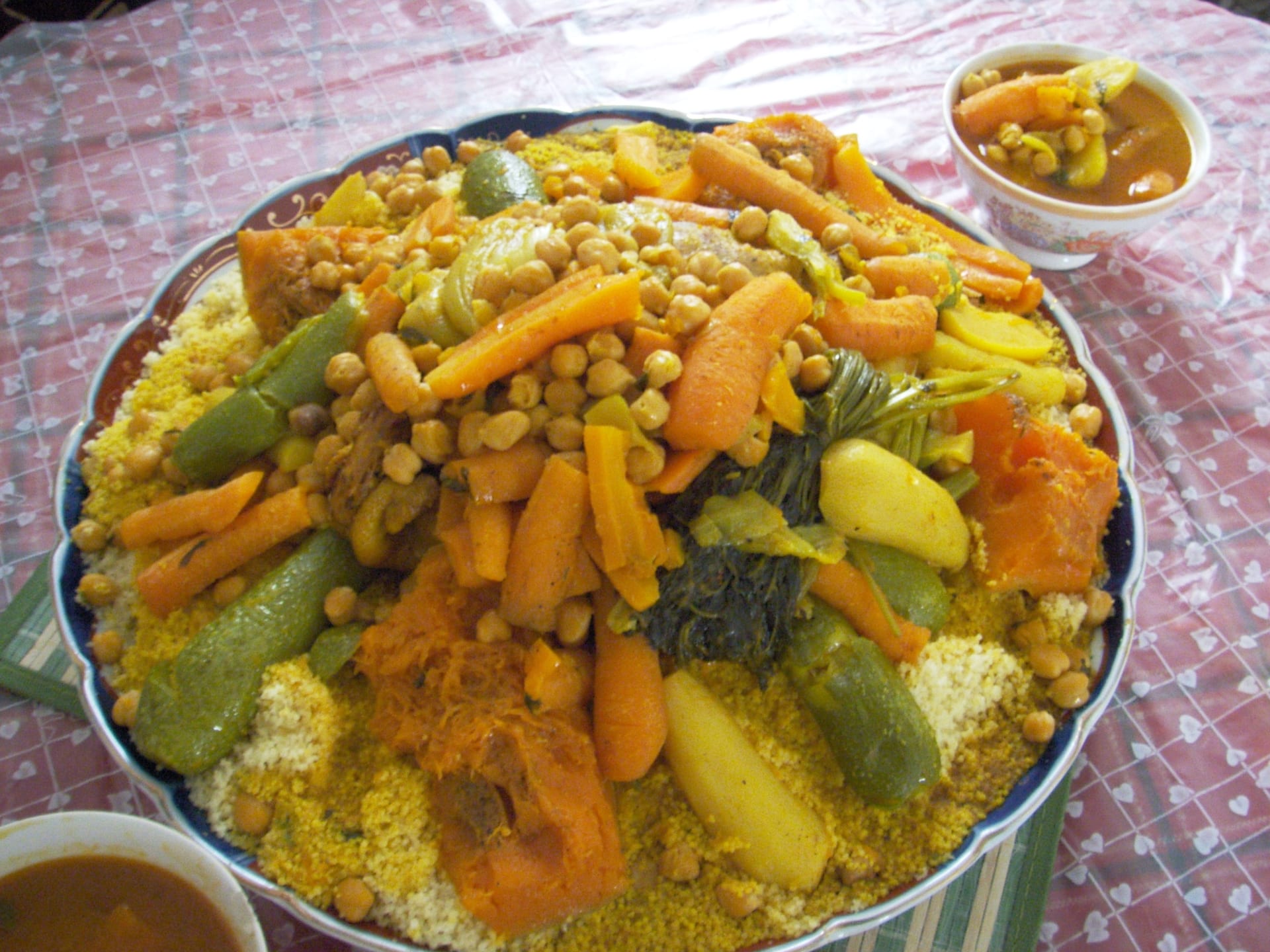
Couscous, Fès 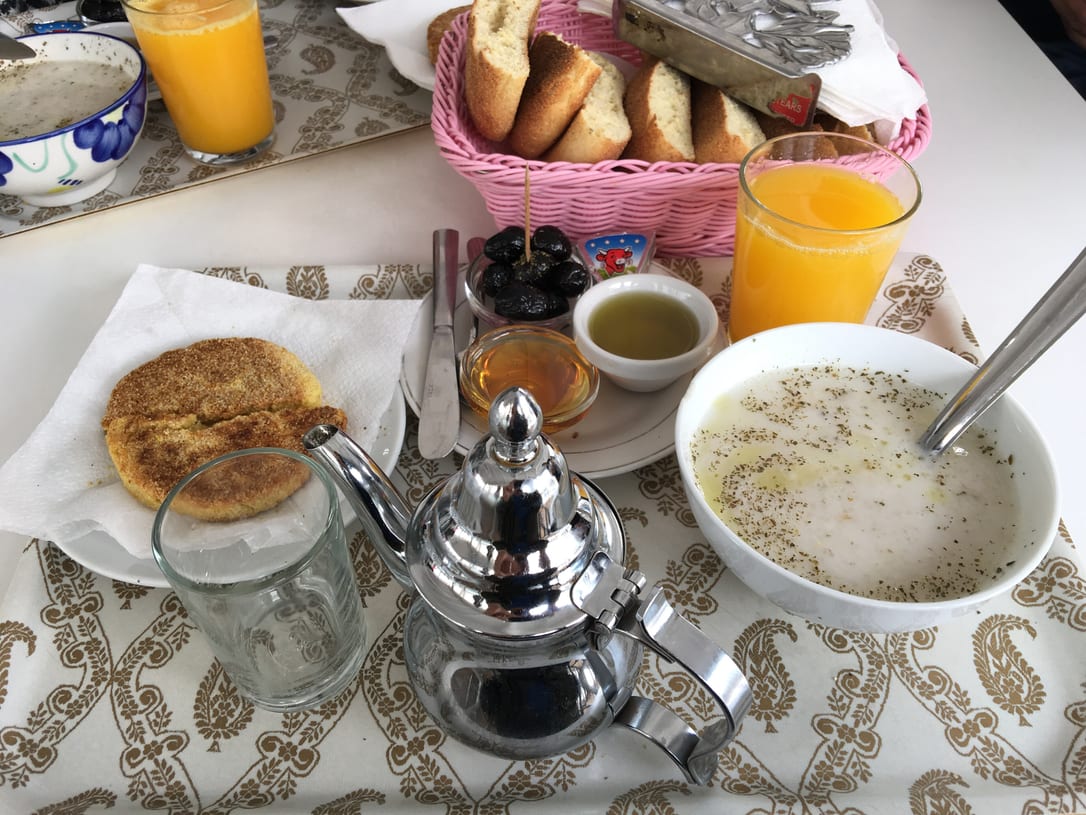
Breakfast, Casablanca 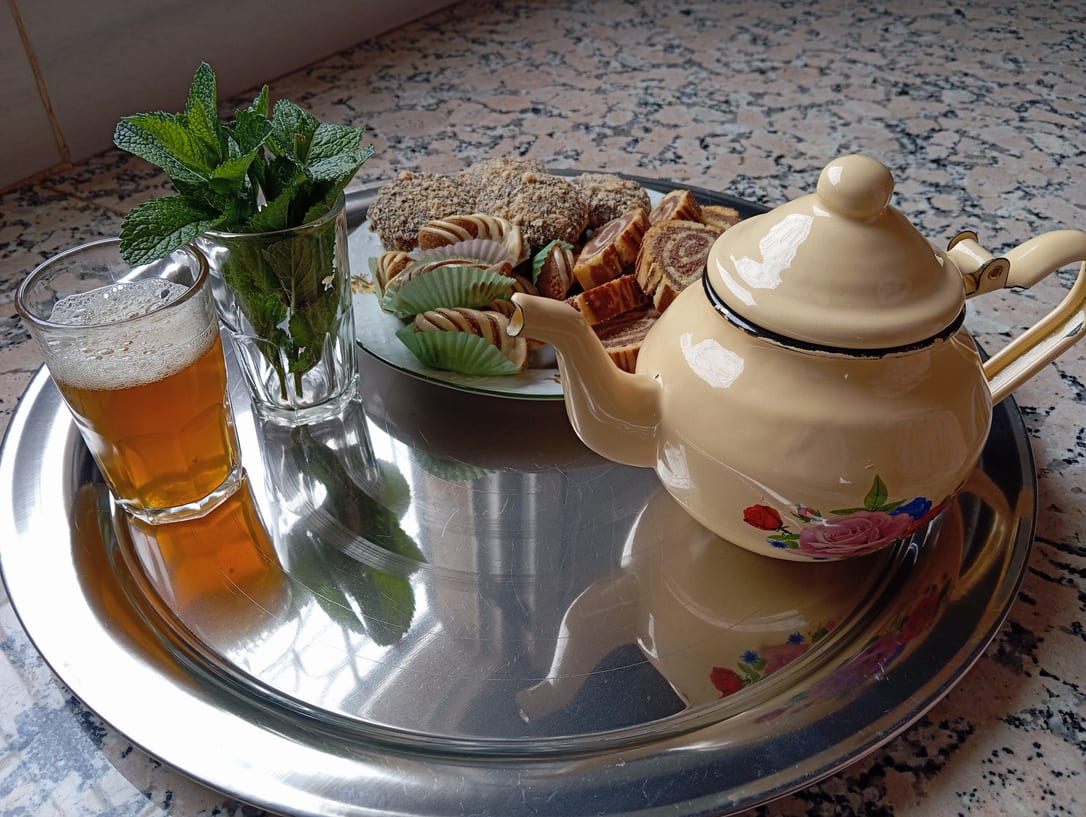
Mint tea and sweets


What a meal costs, and when to ask
The hour names the meal, and the meal its price.
You ask for a meal, on the table within two hours. The price the app starts from is the usual one for the meal of the hour, and yours to change. A family answers with the meal she serves and says which: a lunch answered to a morning ask costs what a lunch costs.
- Breakfast70 MADa person, usuallyasked from 06:00
- Lunch120 MADa person, usuallyasked from 10:00
- Afternoon tea60 MADa person, usuallyasked from 15:00
- Dinner120 MADa person, usuallyasked from 18:00
Your place at the table is one question away.
Photographs: Wikimedia Commons (9)
- Breakfast in Tangier: msemen, eggs, honey, olives and teaby Alexey Komarov,CC BY-SA 4.0, resized
- A tagine of vegetables, the cone just liftedby Khammal92,CC BY-SA 4.0, cropped and resized
- Mint tea and a plate of sweets on a silver trayby مصطفى ملو,CC BY-SA 4.0, resized
- Harira and dates, with a wooden ladleby Atiqa ezahiri,CC BY-SA 4.0, resized
- Tanjia jars waiting by the fire, in Marrakechby Adam Harangozó,CC BY-SA 4.0, resized
- A pastilla in the middle of a laid table, in Fèsby Slg04,CC BY-SA 4.0, resized
- A couscous with seven vegetables, in Fèsby Beata Gorecka,CC BY-SA 3.0, resized
- Breakfast in Casablanca: harcha, a bowl of soup and the teapotby Wimmiden,CC BY-SA 4.0, resized
- The teapot, a glass of mint and the sweets, on the trayby مصطفى ملو,CC BY-SA 4.0, resized